Posts

Is AI powered IP closer than we thought?

Image
When interviewed by World Trademark Review in 2018, I predicted “No imminent AI apocalypse” and “for anything beyond the most simple, objective trademark-related tasks, he sees little hope that AI could replace an attorney”. Now I’m not so sure.  There’s no sign of an apocalypse, but there are clear signs AI is evolving faster than expected. Take the recent announcements from Open AI. Their Dall-E2 model produces astonishing, original images based only on text instructions. Like the image below in response to the instruction ‘An astronaut riding a horse in a photorealistic style’. This acceleration is the opposite of what many of us expected. Instead we thought progress would slow, as boundaries within existing hardware and chip design were reached. Greg Brockman, co-founder of Open AI explained that the stunning improvements come from  the newer model even though it ‘is much smaller & the amount of training compute is similar. Improvements are essentially all due to alg...

IP software and intensity of use

Some firms think that licensing IP software means they have the software and innovation boxes ticked. Not so. What matters is how much the software is used, by how many, and how fully. If the answer is 'not much', it's the wrong solution. With the right one there's plenty of scope to do things more easily, efficiently, and better for clients.  The term 'IP software' covers a wide range of tools and capabilities. Some older systems are stand alone clunky docketing databases. Others run only automated clearance searches. And others, unlike these point solutions, are platforms with a depth and breadth of capabilities. Old clunky docketing databases are a single point solution for tracking deadlines of registered marks and designs. So are often only used by one or two formalities administrators. The intensity of use of this IP software is low when considered against a whole IP team with lawyers and attorneys, as well as clients, associates, and other IP team members...

Big law and the strategic importance of trademark work

Some international law firms now view trademark work as having strategic importance. We consider why, and the implications for those who compete against them. ------------- Trademarks have long been considered a steady specialism within law firms. Registration volumes generally follow trends in economic growth, and the registry processes and matters for obtaining, maintaining and defending IP rights have changed little over time. So not where the action is. So why do some now consider trademark work to be of strategic importance to their firm? Competition The number and size of law firms is increasing, and so is competition to be on panels and to see RFPs. This is putting downward pricing pressure on some types of routine work, such as IP portfolio management and maintenance of rights. But rather than making trademark work less attractive, some firms see trademarks as an area of growing importance for winning new work and differentiating their service offerings. Client acquisition and ...

‘Crazy New Ideas’ in legal innovation

  ‘ Crazy New Ideas ’ is a recent essay by Paul Graham, founder of Y Combinator. An accelerator that has backed crazy idea startups that include AIRBNB; letting strangers stay in your home on air mattresses. Unconventional solutions such as STRIPE; 2 lads from Ireland who have revolutionised taking card payments online with an enterprise value close to US$100 bn. And others covering nuclear fusion, biotech, crypto and a privately developed supersonic passenger aircraft. Reading this essay helped framed an idea I’d been mulling: There will never be Crazy New Ideas in legal innovation! And what’s interesting is why we can be confident of this. By innovation I don’t mean adoption of new technology for automation of existing processes for incremental gain. But truly transformative innovation that leads to wholly new processes or outputs. For the simple reason that law is a domain that is tightly constrained by statute and regulation. Certainly there will be improvements in speed and ef...

The UKIPO gets it! Digitisation, APIs Transformation to be best in the world

LawPanel were thrilled to be told that as part of the UKIPOs ambitious transformation and digitisation, their services would be accessible by API. So enabling direct, secure transfer of information from LawPanel to the UKIPO.  Removing any need for paper, online forms or other friction in the process that adds time, cost and risk of error. Instead workflows on LawPanel for new filings for trademarks, designs and patents, or renewals, change of representative, or IP owner will have the data submitted to the UKIPO instantly at the click of an icon. No copying and pasting into multi page forms for saving as pdfs and sending by email or post. The news came today from the UKIPOs Andy Bartlett, who’s leading ground up transformation of all UKIPO services and solutions, a far reaching programme that has begun and will run until 2026. With the explicit aim of making the UKIPO the best, most advanced IPO in the world.

Beyond docketing

  Many firms and in-house counsel think of ‘IP software’ and ‘docketing database’ as interchangeable terms. Which is understandable as software tools for IP have only ever kept track of registry deadlines. With some add ons to assist with filing and checking local records in the docketing database against official ones at the registry. With Covid we’re seeing expectations change significantly. Firms of all sizes want better tools that do more. Not just to support work from home, but to reduce work and improve client service. For the full lifecycle of an IP right.  From on platform automated clearance searches for trademarks. Online forms for instructing searches and client areas to see results. Through automatic tracking of application status, built in watching and client tools for monitoring and reporting. And so much more. All of which reduce cognitive load and time, and improve client and user experience. Contact us now for a test drive.

New WordPress plugin for online internationtrademark services

  During 2020 we’ve been working on a lot of new trademark functionality, covering search, filing, watching, and record management. With a lot of interest from firms wanting to offer trademark services online, particularly filing and fee quotations. As well as adding this functionality to a site using LawPanel’s APIs we have an even easier and quicker integration for WordPress sites using our new plugin. See it in action on  Trade Mark Direct Network  a new service focussed on easy international filings in any country, but with a particular focus on the EU, UK (now requiring separate registration after Brexit), USA and Canada, Australia and key European countries, with more to follow including online WIPO fee and ordering. This will be the first online calculator fo giving fee estimates for advice and search fees, as well as official fees.

Lawyers, AI and Keyser Söze

Image
  ‘And like that … he’s gone …he became a myth, a spook story.’ ‘The greatest trick the Devil ever pulled was convincing the world he didn’t exist.’ These great lines from the film ‘The Usual Suspects” came to mind during a recent legal AI panel discussion. The panel were well informed and discussing the provocative theme of whether AI will pose a threat to lawyers. Through their losing control, and should they be afraid? Nearly everyone on the panel, as well as those in the audience talked of ‘AI making decisions’. Now this was not unusual, go to any number of discussions on AI and they’ll follow this pattern. For many AI is entirely ephemeral. They know it’s increasingly used in E-discovery and contract automation. Leading them to fear it could be coming for them next. But they have no mental model or clear language for discussing AI. So there is a lack of clarity, and in the fog of confusion, the myth or spook story of AI as a potential slayer of lawyer’s livelihoods has grown. ...

Trying LawPanel is painless

  As the number of firms trying LawPanel grows daily we thought we’d give a quick overview of what this looks like. We make it easy Add just one or two portfolios to begin with. There are no fees during this phase. We do the data import and setup. We give you a data cleaning report showing missing fields and differences between local records and official records for major registries. We come in and show you how to make the most of the LawPanel platform. Then when you’re 100% satisfied of the benefits of LawPanel we can migrate over the rest of your data. And only then is there any cost for your firm. For a demo, trial, or just to find out more please  contact us

The Pizza problem, Machine learning and comprehensive trademark clearance searching

  Thoughts on why current machine learning alone cannot fully automate comprehensive trademark clearance searching. A number of people and firms have applied machine learning techniques to the task of automating word mark clearance searching. And others, including the global head of R&D at one of the leading law firms, have suggested that it’s a valuable R&D path to try now. I’m not so sure that’s so.  We’ve tested search tools that are described as machine learning-driven and compared the results to those from our own search tool which uses a human-designed model of similarity  (US patent here  https://patents.google.com/patent/US20080228485A1/en  ) All are competent and useful for short text strings of a couple of words, particularly where both words are distinctive. However, the machine learning search tools are much less effective when one of the search strings is 3 or 4 or more words and distinctive terms are mixed in with descriptive words. If as a...

We showcase LawPanel at the MDR Lab demo day

Image
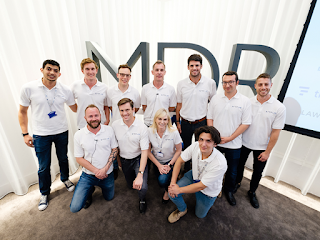
  Last week our time on the MDR Lab program culminated with us presenting the LawPanel platform to an audience of lawyers, journalists, and industry experts. It was great to have so much positive feedback and show off what LawPanel can do.  It was also exciting to see demos from the rest of our cohort: ThirdFort , LitiGate , Digitory Legal , and dealWIP . All of us have worked very hard over the past few months, and each presentation was genuinely impressive.  The idea behind MDR Lab is very far-sighted. Above the Law has described MDR Lab as Y Combinator for the legal tech sector , and from our experience, that’s not far off the mark.  The access to such a well-respected trademark practice has helped us build a suite of new features for LawPanel, which we’ll be releasing to the public later this year. Below you can see us adding marks straight from the register in a matter of seconds.  We’ve always thought that IP law is poised to benefit hugel...

Why the daily life of trademark attorneys is about to get a lot better

Image
 For the last few months, we’ve been working with the trademark practice at Mischon de Reya , getting ready to launch the new version of LawPanel. It’s currently in private beta, and we’re very excited about releasing it to the public later this Summer.   It’s been a real privilege to have so much feedback from such a well-respected practice. One of the most rewarding things about our time on the MDR Lab programme has been observing the real-life implications of IP management software for those who spend so much of their day using it.   The problem with technologists is that we tend to talk in our own private jargon. We’re passionate about what LawPanel can achieve within the sector, but even we spend too much time talking about APIs and dynamic programming and not enough explaining what all this means for the user.   With that in mind, we wanted to explain some of the practical results of our approach, and how LawPanel will help change the working ...

How technology can help women in the law

Historically speaking, being a woman in the legal sector has not been easy. In fact, it’s only a little over a 100 years since women have had access to the profession at all. Due to this, it comes as no surprise that the top ranks in today’s legal sector are dominated by men .   And yet, the majority of Law students in the UK are women, with the figure reaching 67% in 2017 . Theoretically, this should mean the old gender imbalance at the top of legal sector is on its way out.   The problem is that while many women enter the Law, a disproportionately small number ever reach those positions of seniority, with only 33% of partners being women as of 2017 .   Of course, there are many reasons for this disparity. Nevertheless, one of the culprits is glaringly obvious.   Put simply, the work culture in the legal sector, especially among large law firms, is keeping women from realizing their full potential.   For trainees, this comes as no surprise. ...

AI , people, and the superficiality of rationality

 At LawPanel we have an interest in AI: both in what it can usefully do now in the applications we build, but also in what it might enable in the future.   There’s been a couple of interesting articles in recent months on the ‘black box’ nature of AI. The  New York Times opined that the black box of AI is ‘nothing to fear’ , to be followed by the Economist saying that before AI is widely adopted it must explain itself. Like some self-replicating form, these articles then spawned others. So here I give life to another, but somewhat contrarian view.   These and the articles I’ve seen take a curate’s egg view of AI. Yes it’s all very nice this AI coming over here and taking the jobs that are mundane and repetitive, but the moment it begins to make decisions that really matter, such as those with social impact it’s a different matter. That’s when the bien pensant demand the AI explain itself. And to stand up straight with its socks pulled up whilst doing...

LawPanel talks to the World Trademark Review about open data

 This week, Thomas Brattli, our CTO, talked to Tim Lince of the World Trademark Review about registries, APIs, and the philosophy of open data. It’s an important topic, and one we feel strongly about at LawPanel.   You can read the full article here

Inside Mishcon de Reya’s MDR Lab

Image
 We’ve had a great two weeks at Mishcon de Reya’s MDR Lab , and we wanted to share a little of what we’ve been up to so far.   Of course, there’s been an opportunity to play with some hi-tech gadgets, including using a 3D printer to bring the LawPanel logo to life.     As the only member of the cohort working on trademarks and IP law, it’s also been interesting to meet companies working in other areas of the legal tech space. For those of you who want to learn more, you should look at DealWIP , thirdfort , Digitory Legal , and LitiGate .   From online collaboration to automated claims analysis, there are some really intriguing ideas about how to make practicing law easier.   Most importantly, we’ve had an opportunity to spend a lot of time speaking to lawyers at Mishcon de Reya’s trademark practice, discussing everything from the day-to-day management of such a large practice to how new trends are shaping the sector.   We’ve still ...

LawPanel joins Mischon de Reya’s MDR Lab

 We’re excited to be taking part in this year’s MDR Lab, run by Mishcon de Reya. Each year, the MDR Lab chooses a select number of legal-tech companies to join the programme, with the aim of helping them better understand the evolving needs of the legal sector.   With one of the largest IP groups in London, Mischon de Reya has gained a reputation for innovation. The firm represents some of the most famous brands on the planet, which makes it the perfect place for LawPanel to develop our understanding of the changing landscape of intellectual property law.   We’re all very excited by this partnership and the coming weeks, and we’ll be updating you on the insights we gain from our time with Mischon de Reya.

We talk to Trademark Lawyer Magazine about AI and the future of trademark law

Image
  This is an extract from an editorial written by our CEO Mark Kingsley-Williams for the Trademark Lawyer  – you can read the full article  here   Hardly a day seems to pass without a new report prophesying AI delivered doom for all types of occupations. Journalists foretell (some with ill-concealed glee) of how their friends who went into law and medicine will face a technological tsunami of the sort that has already crashed over them thanks to the internet.   After all, studies show algorithms are better than medics at finding tumours in radiography images. And not only do they find tumours that medics miss, but unlike medics the algorithms do not give diametrically opposite opinions when shown the exact same image on different occasions. Jeremy Bentham, the 18th century jurist and philosopher was right when he observed ‘The rarest of all human qualities is consistency.” If you want consistency choose the AI.   And yet througho...

What is the dark web and why does it matter to IP professionals?

Image
  What is the internet? It sounds like an easy question. After all, we all use it everyday. In fact, most of us spend an appreciable fraction of our lives using it.   But like a lot of the technology modern life depends on, the fact is that few of us can explain how it works. We’ve already discussed some of the many advantages the internet is bringing for trademark professionals , but it also brings new risks, and the dark web is chief among them.   And to understand what the dark web is, we need to take a look at how visiting a website actually works.   From the Net to the Web   We use the terms internet and web interchangeably, but these two words mean two very different things.   The internet is a network of networks. Basically, you can think of the internet as the sum total of all the computers and other devices that connect to one another.   What we call the web is a way of sharing information using this network of networks. Think...

We talk to World Trademark Review about the power of APIs

Image
  This is an extract from an editorial written by our CTO Thomas Brattli for World Trademark Review  – you can read the full article here   Trade mark registries have changed a lot over the last century. Today, anyone can search the UKIPO in a matter of seconds. It’s hard to believe that less than 30 years ago the same search would have meant travelling to London in person to leaf through decades worth of gazettes.   Every attorney has their own experiences of the registries and their own opinions about what still needs to be done. Some countries have made enormous strides in creating user-friendly databases. Some have most definitely not.   But there is another way to look at the registries. Those of us who work in legal technology are interested in the underlying software that makes them work. When we talk about registries, we’re thinking of the databases themselves: how that digital information is organized and how it is accessed.  ...